


When Will This REALLY be Over? Part 3a of 4: Coronavirus Testing
- COVID Carrie
- May 7, 2020
- 9 min read


Welcome back friends,
In part 1 of this essay series, I summarized three indicators that will tell us when the COVID crisis is really over. By “really over” I mean hugging, going to the Superbowl, and everything else we did without fear back in pre-pandemic 2019. I reviewed three strategies: wait it out, hunt and catch, and armor and shields. In the last post, I discussed the “wait it out” approach in more detail. In this essay (I’m calling Part 3a of 4 in this series), we’ll discuss the “hunt” part of the “hunt and catch” approach. The next post (part 3b of 4) will focus on the “catch” part of “hunt and catch.”
What is the difference between viral and antibody testing?
How much viral testing are we doing in the United States?
How much viral testing should we be doing in the United States to identify COVID-19 cases effectively?
What is the difference between viral and antibody testing?
Virus testing counts people who are currently infected with the SARS-CoV-2 virus and probably contagious.
Virus testing is most often done with a swab sample from the nose or throat, although some tests use saliva. Some viral methods search for viral genetic material, RNA (also called PCR tests). Other tests look for pieces of proteins from the virus, called antigens. The genetic-based method is better at finding the infection (especially when it is there at lower levels) than the antigen method, however, the antigen-based process is faster.
The genetic-based virus testing methods are well-developed and reliable. If I sent samples to three different labs, they would probably yield the same results.
Antibody testing identifies people who have recovered from a prior infection.
Antibody tests (or serological tests) look for specific antibodies made to target this coronavirus. This analysis uses a blood sample.
The methods for antibody testing are not as well-developed as virus testing. There are over a hundred different COVID-19 antibody tests using several different techniques, and the FDA has not yet had time to conduct robust validation studies. If I sent the same set of samples to three different labs for antibody testing today, I would expect to get different results.
However, scientists are still working on proving whether people who test positive with an antibody test have immunity against reinfection. Studies are underway to learn what level of antibodies we need for protection against getting it a second time. We also need to learn how long the immunity lasts. Antibody test results will be useful to decide who can safely return to crowded places once these critical studies have been conducted.
The new antibody tests are useful today, though, for research purposes. They are used to estimate how many people in an area have already had the virus. Collecting this data informs us of how far along we are toward developing herd immunity. It also helps us understand the past path of virus transmission.
We’ll talk more about antibody testing and immunity to COVID-19 in the upcoming essay on vaccines and prophylactic treatments. For the rest of this essay, though, I’ll focus on active virus testing, which is the tool we use to hunt down COVID-19 cases.
How much viral testing are we doing in the United States?
Have you noticed stories about testing in the United States seem to contradict one another? Well, I have. The reason is the same testing numbers can be displayed and interpreted in various contexts. Some show us doing lots of testing, more than anyone else. Other times numbers show that we are not testing enough. If you find this frustrating and want to learn more, this section is for you!
To be an educated viewer of testing numbers, though, I have to warn you there will be a little math in this section. If you aren’t in the mood for a math and graphing lesson, I won’t be offended, scroll down. I’ll meet you back in section three.
Still here? Great! Let’s look at the amounts of SARS-CoV-2 virus testing in the US and four other countries in different contexts. I prepared these graphs on May 2, 2020, using data collected from ourworldindata.org.
How many tests in total have been conducted over the course of this entire pandemic?
Figure 1 shows the cumulative total number of all tests performed.

Graph prepared using data obtained from Our World in Data. Max Roser, Hannah Ritchie, Esteban Ortiz-Ospina, and Joe Hasell (2020) - "Coronavirus Pandemic (COVID-19)". Published online at OurWorldInData.org. Retrieved on May 1,2020 or May 2, 2020 from: 'https://ourworldindata.org/coronavirus' [Online Resource]
The US has completed over 6 million viral tests, far more than these other countries. This cumulative total does not tell us about the current testing rates, though, which are essential to understanding how prepared we are to identify new COVID-19 cases as they emerge from now on.
How many tests were run yesterday (or the day last reported)?
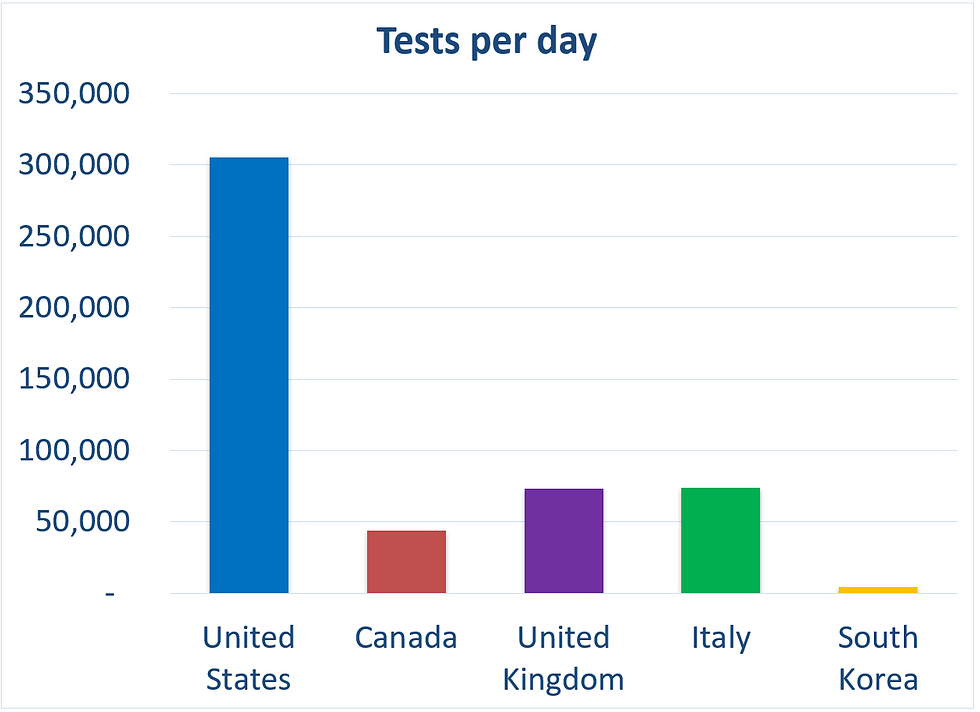
Figure 2 shows how many tests are performed in a day.
Graph prepared using data obtained from Our World in Data. Max Roser, Hannah Ritchie, Esteban Ortiz-Ospina, and Joe Hasell (2020) - "Coronavirus Pandemic (COVID-19)". Published online at OurWorldInData.org. Retrieved on May 1,2020 or May 2, 2020 from: 'https://ourworldindata.org/coronavirus' [Online Resource]
The US is currently running over 300,000 viral tests per day, which is more than the other four countries. Therefore, saying that, “the US tests more than other countries” is accurate, but it is not the whole story. It is not the most important number if our goal is to deploy an effective hunt and catch strategy in the US.
The population of the US is 331 million, much higher than the comparison countries (68 million in the United Kingdom, 60 million in Italy, 51 million in South Korea, and 38 million in Canada). Population size matters when we are considering COVID-19 testing needs. If you have more people, you need more tests to achieve the same coverage!
How many tests in total have been conducted over the course of this entire pandemic relative to population size?
Figure 3 shows total tests relative to population size.

Graph prepared using data obtained from Our World in Data. Max Roser, Hannah Ritchie, Esteban Ortiz-Ospina, and Joe Hasell (2020) - "Coronavirus Pandemic (COVID-19)". Published online at OurWorldInData.org. Retrieved on May 1,2020 or May 2, 2020 from: 'https://ourworldindata.org/coronavirus' [Online Resource]
Relative to their total population, Italy is the testing leader among these five countries, testing about 34 per every 1000 people. In the US, we’ve run about 20 tests for every 1000 people.
How many tests were run yesterday (or the day last reported) relative to population size?
Figure 4 shows daily tests relative to population size.

Graph prepared using data obtained from Our World in Data. Max Roser, Hannah Ritchie, Esteban Ortiz-Ospina, and Joe Hasell (2020) - "Coronavirus Pandemic (COVID-19)". Published online at OurWorldInData.org. Retrieved on May 1,2020 or May 2, 2020 from: 'https://ourworldindata.org/coronavirus' [Online Resource]
Italy, Canada, and the United Kingdom are testing a higher percentage of their population each day than we are in the US. The US is testing less than 1 in 1000 people per day. Compared to some countries this is high, compared to other countries, this is low. This is not the whole story, either. There is another significant difference between countries that also affects how many tests you need to run. Can you guess?
You got it! The answer is that we need to consider how bad of a COVID-19 problem each region has. In areas with a higher percentage of infected people, more testing is needed to find all the cases!
As of May 2, 2020, there have been approximately 1,100,000 confirmed cases in the United States, 210,000 in Italy, 180,000 in the United Kingdom, 55,000 in Canada, and 11,000 in South Korea. Let’s look at the relative virus testing numbers again, but this time we’ll compare them to the counts of COVID-19 cases.
How many tests in total have been conducted over the course of this entire pandemic relative to total confirmed COVID cases?
Figure 5 displays the number of total tests performed divided by the total COVID-19 cases.

Graph prepared using data obtained from Our World in Data. Max Roser, Hannah Ritchie, Esteban Ortiz-Ospina, and Joe Hasell (2020) - "Coronavirus Pandemic (COVID-19)". Published online at OurWorldInData.org. Retrieved on May 1,2020 or May 2, 2020 from: 'https://ourworldindata.org/coronavirus' [Online Resource]
South Korea ran 58 tests for every one COVID-19 case. The US, in contrast, has tested six people for every one positive case.
Next, let's look at the current daily testing rates relative to the number of new confirmed cases. The daily new confirmed cases on the most recent day reported as of May 2, 2020, were approximately 34,000 in the United States, 1,800 in Italy, 6,200 in the United Kingdom, 1,800 in Canada, and only 6 in South Korea.
How many tests were run yesterday (or the day last reported) relative to new daily confirmed COVID cases?
Figure 6 shows the current daily tests performed divided by the number of daily cases.

Graph prepared using data obtained from Our World in Data. Max Roser, Hannah Ritchie, Esteban Ortiz-Ospina, and Joe Hasell (2020) - "Coronavirus Pandemic (COVID-19)". Published online at OurWorldInData.org. Retrieved on May 1,2020 or May 2, 2020 from: 'https://ourworldindata.org/coronavirus' [Online Resource]
South Korea is testing the most per day, relative to their current COVID-19 numbers at 749 tests per every one new case. The US is performing about 9 tests per positive case. The relative number of tests performed compared to the number of cases is the measure that matters most for the deployment of an effective hunt and catch approach to stop the spread of COVID-19. If you are still finding a lot of positives, that means you aren’t testing enough people. If you test lots of people and they are mostly negative, that means your outbreak is mostly under control.
We just covered a lot. Let’s pause for a brief review before moving into a discussion of how much testing we should be doing.
The US is doing a lot of testing, more than other countries in cumulative total tests (Figure 1) and tests per day (Figure 2). However, when you factor in the relative population sizes of a country, the US is testing more than some and less than others both overall in cumulative totals (Figure 3) and on a daily testing number basis (Figure 4). Some countries (e.g., South Korea) have performed significantly more tests relative to the number of cumulative cases compared to the US (Figure 5). Lastly, based on current daily tests performed versus new daily COVID-19 cases found, some countries (e.g., South Korea) are performing significantly more testing than the US.
What do these differences among countries have to do with ensuring you have enough testing to hunt down all of your COVID-19 cases?
“A country that performs very few tests for each case it confirms is not testing widely enough for the number of confirmed cases to paint a reliable picture of the true spread of the virus. Whilst those people with the most severe symptoms may have been tested in such countries, there are likely to be many times more people with mild or no symptoms that were never tested.” -Joe Hasell, Esteban Ortiz-Ospina, Edouard Mathieu, Hannah Ritchie, Diana Beltekian, Bobbie Macdonald, and Max Roser. To understand the global pandemic, we need global testing – the Our World in Data COVID-19 Testing dataset, March 31, 2020.
Because the US COVID-19 caseload is so high and our population size is relatively large, even though we are running more viral tests than any nation, it is still nowhere near enough to control the spread.
How much viral testing should we be doing in the United States to identify COVID-19 cases effectively?
A recent report from Harvard concluded we need to run 20 million viral tests per day in the US. At this rate, we could sample approximately 6% of our population, which would be enough to test all critical workers, everyone with symptoms, and enough people without symptoms to have confidence that we are finding most of the cases.
If we lessen mass stay-at-home measures, without this level of testing in place, we will cause an increase in COVID-19 case numbers. To launch an effective hunt and catch strategy, we need this level of testing to hunt down all the infected people effectively.
About 300,000 tests per day are being conducted today in the United States. Our capacity increases day after day; however, we are far from reaching the target of 20 million. To ramp up to this scale, it will take a massive effort.
Until a vaccine or other protective measure is developed, we don’t have straightforward choices. We could stay at home longer, but no one wants that to happen. If we go about our lives like normal and wait for herd immunity to develop, though, the virus may spread out of control. Or, the third and fastest approach that we have the capabilities to do, this one, is probably the best approach. If we scale up testing 100 fold and rigorously find all the positive people and keep them away from other folks, we’ll slow the spread while living semi-normal social lives again. This is why you hear a lot of leaders and public health experts begging for more testing.
I hope that this essay helped explain the world of testing and the status of viral testing in the United States. Once a positive case is found with viral testing, contact tracing is the next step to stopping the virus. We’ll talk more about that in the next post.
Until next time,
COVID Carrie
P.S. To learn more about how to implement effective testing strategies, I recommend reading these resources and following the authors for updates.
World Health Organization (WHO), Considerations in the investigation of cases and clusters of COVID-19, April 2, 2020, https://www.who.int/publications-detail/considerations-in-the-investigation-of-cases-and-clusters-of-covid-19
One World in Data (open source data source led by the University of Oxford and Global Change Data Lab), To understand the global pandemic, we need global testing – the Our World in Data COVID-19 Testing dataset https://ourworldindata.org/covid-testing#licence
Center for Disease Prevention and Control (CDC), COVID-19 Serology Surveillance Strategy https://www.cdc.gov/coronavirus/2019-ncov/covid-data/serology-surveillance/index.html
John Hopkins University, A national plan to Enable Comprehensive COVID-19 Case Finding and Contact Tracing in the US, April 10, 2020, https://www.centerforhealthsecurity.org/our-work/pubs_archive/pubs-pdfs/2020/200410-national-plan-to-contact-tracing.pdf
Johns Hopkins COVID-19 Testing Insights Initiative: Providing public access to COVID-19 testing data, resources, and expert analysis https://coronavirus.jhu.edu/testing
John Hopkins University, The Facts About COVID-19 Tests https://coronavirus.jhu.edu/downloads/JHU_Facts_About_COVID-19_tests.pdf
Harvard University, Roadmap to Pandemic Resilience, April 20, 2020, https://ethics.harvard.edu/files/center-for-ethics/files/roadmaptopandemicresilience_updated_4.20.20_0.pdf


Comments